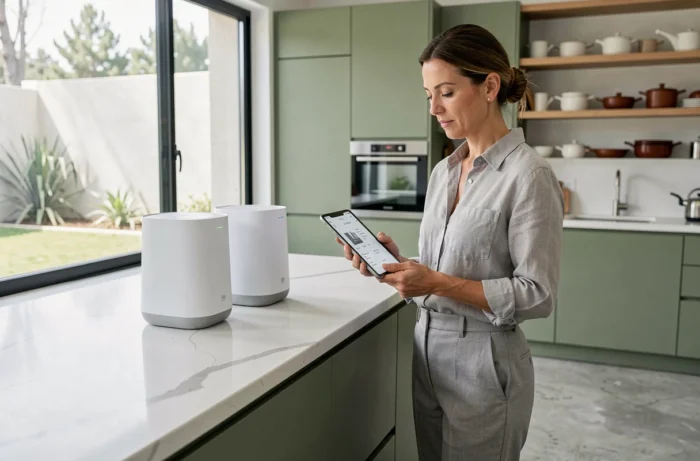
The equipment of a modern home is no longer just a list of devices categorized by room. The regulatory framework has evolved, performance indicators have become more refined, and the cost of ownership has taken precedence over the purchase price as a selection criterion. Choosing the right equipment for your home requires mastering a few technical parameters that change the game in the long term.
Sustainability Index: The Technical Filter to Apply Before Any Purchase
The sustainability index is gradually replacing the reparability index in France. It is mandatory for televisions starting from January 8, 2025 and for washing machines from April 8, 2025, in accordance with decree n° 2024-316 and the orders of April 5, 2024.
This new indicator is not limited to disassembly. It includes reliability, wear resistance, and ease of maintenance. We recommend consulting it systematically, even for product categories that are not yet subject to it, as it provides a framework applicable to all household appliances.
For the uncovered categories (refrigerators, ovens, dryers), the old reparability index remains the only official reference. Compare the announced availability of spare parts, the technical documentation provided, and the prices of the most requested components (seals, filters, heating elements). An appliance whose parts are accessible several years after purchase will cost you significantly less than a model replaced after a few years.
You can access the equipment on French Home to compare recent ranges that incorporate these sustainability criteria in their product sheets.
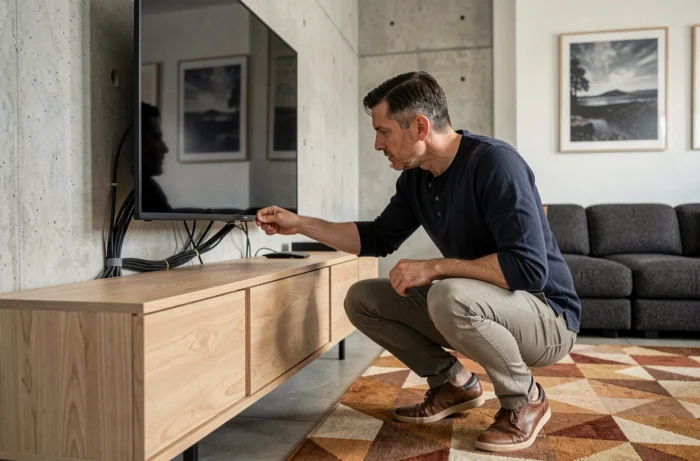
Software Compatibility of Connected Devices for the Home
A connected device without updates becomes obsolete even if it still works. The European ecodesign regulation provides for obligations regarding the availability of software updates for certain categories of devices. We observe that this point is consistently overlooked when choosing smart home equipment.
A connected thermostat, a smart lock, or a lighting management system relies on a software ecosystem. If the manufacturer stops support, the device loses its connected functionalities, sometimes in just a few months.
Criteria to Check Before Purchasing a Connected Device
- The guaranteed duration of software update availability, indicated in the general terms or product sheet
- Compatibility with open protocols (Matter, Zigbee, Z-Wave) that allow switching to another ecosystem without replacing everything
- The existence of a local API or offline mode, so the device remains functional if the manufacturer’s cloud shuts down
A Matter-compatible device, for example, can work with multiple platforms (Apple Home, Google Home, Amazon Alexa) without relying on a single provider. Prioritizing open protocols protects your investment over time.
Energy Performance Diagnosis and Energy Choice: Reasoning from the Building, Not the Catalog
Since January 1, 2025, homes classified as G can no longer be offered for rent. This regulatory constraint has a direct effect on the choice of energy equipment, including for owner-occupiers.
The energy performance diagnosis must precede the choice of the heating system. Installing a heat pump in a poorly insulated home is akin to heating the outdoors. We recommend addressing the thermal envelope first (insulation of attics, replacement of windows, treatment of thermal bridges) before sizing the heat production system.
Sequencing Investments for a Modern Home
The classic trap is to oversize a heating device to compensate for inadequate insulation. An oversized device consumes more during short cycles, wears out faster, and costs more to maintain.
Start with the energy performance diagnosis to identify priority areas. If the diagnosis points to losses through the roof, investing in a double-flow ventilation system or a connected thermostat will have only a marginal effect. The order of intervention radically changes the return on investment of each piece of equipment.

Real Cost of Ownership: Comparing Beyond the Purchase Price
The price displayed in stores represents only a fraction of the total cost of a device. The cost of ownership includes consumption, maintenance, and replacement of wear parts. It is on this basis that we advise making trade-offs between two competing references.
Take the example of a dryer. A heat pump model costs more to purchase than a traditional condensation model, but its annual consumption is significantly lower. Over the lifespan of the device, the initial price gap is often closed, or even reversed.
Concrete Comparison Points
- The price and availability of the most requested spare parts (filter, door seal, drainage pump)
- The disassembly of the device, which affects the cost of a repair intervention
- The standby consumption, often overlooked but significant for connected devices that remain powered continuously
- The freely accessible technical documentation, which allows for first-level maintenance without a technician
A device whose manufacturer publishes repair tutorials and sells its parts directly will cost much less to maintain than a closed model, even if the latter has a lower catalog price.
Choosing the equipment for your modern home comes down to balancing purchase price and cost of ownership over several years. The sustainability index, software compatibility, and the energy performance diagnosis of the home form the three pillars of an informed decision. Every euro invested in a repairable device that is properly sized for your building works longer than one spent on a product that is quickly replaced.