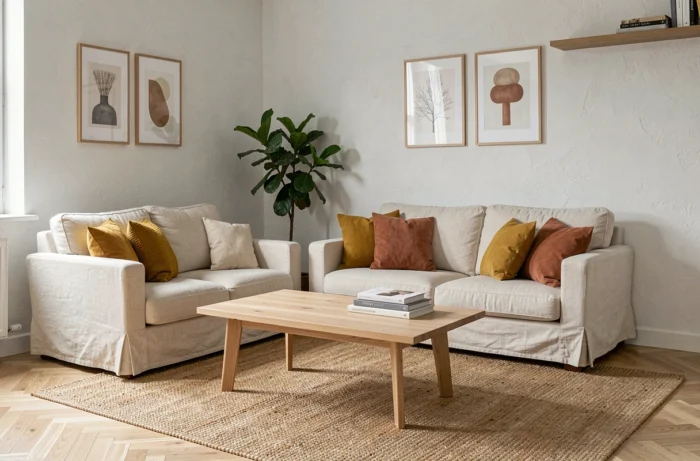
Refreshing your interior without accumulating more purchases means distinguishing between what can be transformed, what can be repaired, and what can be taken back or reused. Comparing these three options reveals differences in cost and durability that classic home décor guides rarely address. French regulations also offer practical ways to update an interior without generating unnecessary waste.
Transform, repair or replace: a comparison by décor category
Not every element in an interior ages in the same way. A freshly painted wall looks new again in just a few hours. A sofa with a sagging seat needs reupholstering or new foam. Solid wood furniture can be sanded and refinished, whereas melamine-coated particleboard furniture does not take well to a second life.
| Décor category | Can be transformed (color, finish) | Can be repaired | Take-back or reuse options |
|---|---|---|---|
| Wall paint | Yes, without limit | Not applicable | Not applicable |
| Solid wood furniture | Yes (sanding, staining) | Yes (legs, hinges) | Yes (retailer take-back, resale) |
| Particleboard furniture | Limited (adhesive film, paint) | Difficult | Possible depending on condition |
| Sofa / armchair | Yes (slipcover, fabric) | Yes (foam, springs) | Yes (take-back, donation) |
| Household linens (curtains, cushions) | Yes (dyeing, sewing) | Limited | Yes (dedicated textile collection stream) |
| Lighting | Yes (lampshade, bulb) | Yes (wiring, socket) | Easy to resell |
| Decorative objects (frames, mirrors, vases) | Yes (patina, framing) | Varies | Resale or donation |
This table highlights one key point: the easiest items to transform are also the least expensive to refresh. Paint, textiles and lighting can dramatically change the atmosphere of a room without replacing its main furniture.
Some French retailers are also subject to a take-back requirement for used furniture, under rules that depend on store size and whether the sale is online (French Environmental Code, Article R. 541-165, in force since August 18, 2025). Before buying a new piece of furniture, check whether the retailer will take back the old one to help offset the cost of replacing it.
Resources bring together practical ideas for every room. For example, the home section of Mon Blog Beauté features living room, kitchen and bedroom inspiration focused on reversible changes.

Colors and textiles: affordable ways to refresh your décor
Changing a wall color remains the décor update with the best effort-to-results ratio. A beige living room transformed with sage green or terracotta completely changes how the space feels. The cost is limited to a few cans of paint and half a day’s work.
Textiles are the second key tool. Curtains, cushion covers, throws and table linens absorb and diffuse light differently depending on their material and color. Refreshing a room’s textiles costs a fraction of the price of new furniture, yet can have a comparable visual impact.
One little-known fact: household linens are covered by an extended producer responsibility scheme (French Environmental Code, Article R. 543-214, in force since January 1, 2021).
Worn textiles do not necessarily end up as waste. Donating them or dropping them off at a collection point sends textiles in good condition for reuse, while the rest are recycled. ADEME’s report on 2023 data confirms that a significant share of the textiles sorted by operators under contract with Refashion was reused.
Three rules for choosing a flexible color palette
- Choose neutral or muted wall colors (off-white, warm gray, rosy beige) as a backdrop for colorful accessories that are easy to change
- Keep bold colors for reversible elements such as cushions, vases, frames and accent lighting, rather than tiles or kitchen countertops
- Test a color on a single wall before painting the whole room to reduce the risk of getting tired of it and the cost of changing it back
Durable furniture and personal style: where to invest
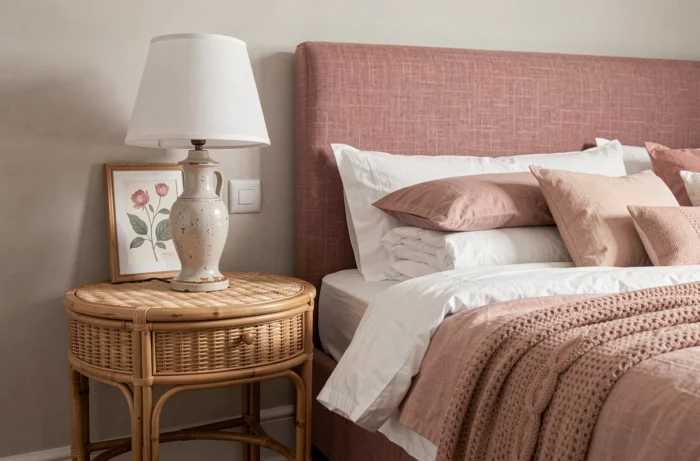
Key furniture pieces (dining table, sideboard, bed) are where an upfront investment makes the most sense. Solid wood furniture can be repaired, transformed and resold, whereas its melamine-coated equivalent has a limited lifespan and does not take well to modifications.
This does not mean every piece of furniture has to be expensive. The goal is to focus your budget on pieces you will keep for a long time and treat everything else as flexible. A quality sofa with a removable cover can work with several décor styles. An unfinished pine shelf can be stained to suit your changing tastes.
What to look for in furniture that ages well
- Solid or thick-veneer material that can withstand sanding and touch-ups
- Mechanical joints (screws, dowels) rather than glue alone, to make repairs easier
- Standard dimensions that work with different room layouts if you move
- A neutral or unfinished surface that can be changed with wax, oil or paint without extensive stripping
The aim is not to rule out buying new, but to save new purchases for durable pieces and refresh the décor with reversible changes. A living room can take on three different looks in five years simply by changing the wall colors, textiles and decorative objects, without replacing a single piece of furniture.
Space and layout: rethink the flow before buying
Before looking for a new piece of furniture, simply moving the pieces you already own can sometimes transform a room. Turning a sofa toward the window instead of the wall changes the feel of a living room. Moving a kitchen table fifty centimeters can clear a walkway and make the room feel more spacious.
Rearranging costs nothing and changes how every room feels. Competitors often recommend buying space-saving furniture. A more effective first step is to map out how people move through each room and remove visual obstacles (overly tall furniture, objects left on the floor) before considering a purchase.
Decorative objects also benefit from being moved around regularly. A mirror moved from the entryway to the living room changes the light. A vase moved from the kitchen to the bedroom gives you a fresh perspective. This rotation costs nothing and simply requires a little attention to how light and colors interact in each space.
The most personal interior is not the one filled with the most objects, but the one that reflects thoughtful choices about a few well-chosen pieces, surrounded by elements that are easy to update. French regulations on take-back and reuse now provide a practical framework for refreshing your home without creating waste.