
Optimizing a fitness program is not just about stacking sessions. The difference between stagnation and progress often lies in technical adjustments that generic programs overlook: fatigue management, self-regulation of intensity, load periodization. Here are ten concrete levers to get more out of each workout.
1. Control intensity with repetitions in reserve (RIR)

Consistently training to muscular failure generates disproportionate nervous fatigue compared to the growth stimulus. We recommend using the concept of repetitions in reserve (RIR): finish each set with 1 to 3 repetitions still achievable.
This mode of self-regulation allows you to adjust the load in real-time based on your condition for the day. On a day of accumulated fatigue, you slightly reduce the load to maintain the same RIR. On a favorable day, you increase it. The useful volume remains stable without accumulating unnecessary joint stress.
2. Schedule deload weeks every four to eight weeks

The deload week involves temporarily reducing volume or intensity to allow connective tissues and the nervous system to recover. Specifically, you keep the same exercises while decreasing the load or the number of sets.
Ignoring this mechanism leads to performance plateaus or even overload injuries. Planning a deload every four to eight weeks based on your level maintains long-term adaptability. Find more resources to structure your sports training on France Sports to complement this periodization logic.
3. Adapt the weekly split to your actual level
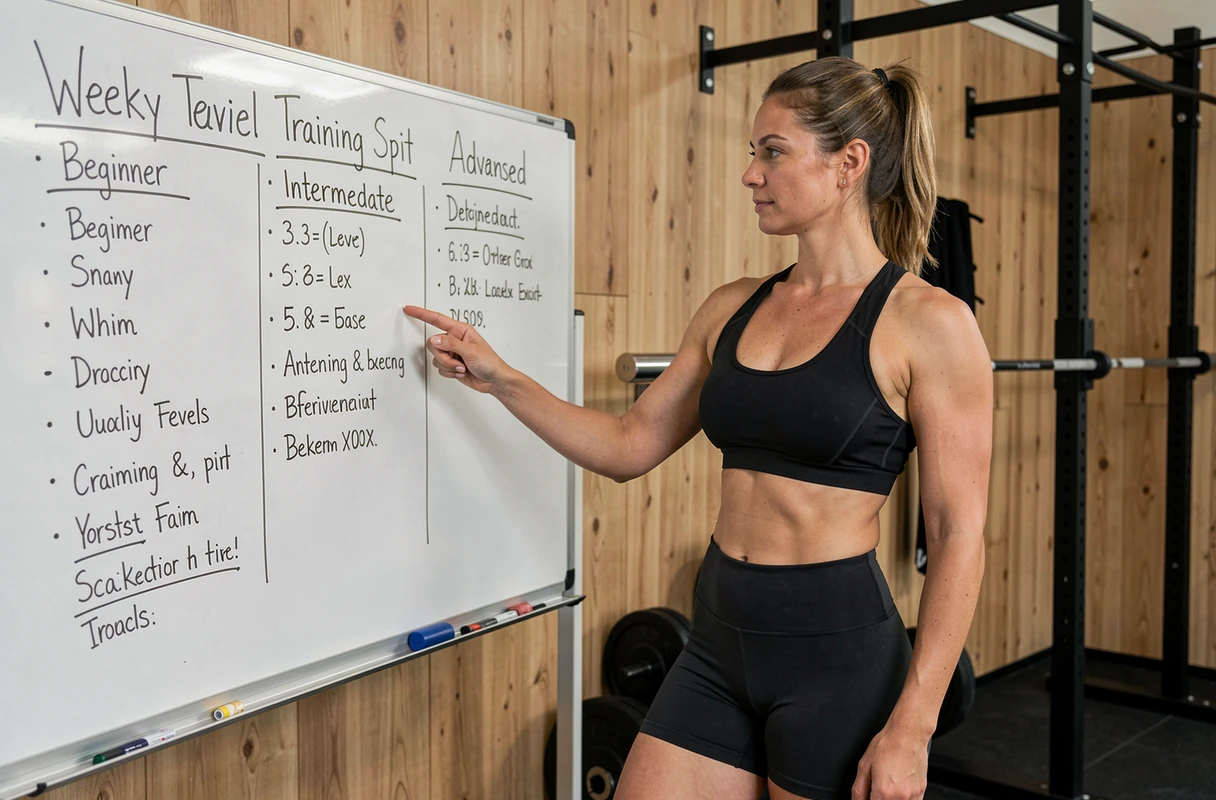
A beginner gains more benefits from full-body sessions spread over two to three days than from a classic split designed for advanced practitioners. The stimulus per muscle group remains sufficient when recovery capacity is still high.
As the workload increases, switching to a split format (upper/lower or push/pull/legs) over four weekly sessions becomes relevant. The criterion for this transition is not seniority, but the difficulty of recovering between two full-body sessions.
4. Prioritize compound exercises at the beginning of the session

Compound movements (squat, deadlift, bench press, rowing) recruit multiple muscle groups simultaneously. Placing them at the beginning of the session takes advantage of nervous freshness to handle significant loads.
Postponing these movements after isolation work reduces their potential for progressive overload. Isolation exercises maintain their place at the end of the session to target a specific weak point without compromising the quality of heavy movements.
5. Apply graduated progressive overload

Progressive overload is not just about adding weight to the bar. Three complementary levers allow you to increase difficulty:
- Add one to two repetitions on one or more sets before increasing the load
- Reduce rest time between sets to densify the work
- Increase the range of motion (deficit, pause in the bottom position)
Progressing on only one parameter at a time avoids overly abrupt difficulty jumps that degrade technique.
6. Structure recovery around sleep

Sleep remains the primary factor for muscle and nervous recovery. No nutritional strategy or active recovery can compensate for chronic sleep deprivation.
We observe that practitioners who stagnate almost always underestimate this parameter. Before modifying the program, checking the quality and duration of nighttime rest is the first diagnosis to make.
7. Vary exercises without changing the logic

Changing exercises every week prevents measuring progress. The rotation should follow cycles of several weeks: keep the same main movements for four to six weeks, then introduce close variants.
Replacing a back squat with a front squat, or a bench press with a dumbbell press, maintains the motor pattern while modifying the stimulus. This compromise between consistency and variation prevents monotony without sacrificing traceability of progress.
8. Calibrate volume by muscle group

The total volume of sets per muscle group per week is a key variable. Increasing volume beyond the recovery capacity produces the opposite effect of what is sought.
Starting from a moderate volume, then adding one to two sets per week over a cycle of several weeks allows you to identify the threshold beyond which performance stagnates or regresses. This threshold is individual: noting it in a training log remains the most reliable method.
9. Use a notebook or tracking app

Without traceability, progressive overload relies on memory, leading to underestimating or overestimating loads from one session to the next. Recording each set, each load, and each RPE (rate of perceived exertion) transforms the program into a measurable system.
A program without tracking is just a list of exercises. The notebook also helps identify signals of accumulated fatigue: decreased performance over several consecutive sessions, recurring joint pain, declining motivation.
10. Do not confuse soreness with session effectiveness
Soreness indicates unusual mechanical stress, not the quality of the muscle stimulus. A productive session may not generate any soreness, especially when the body is adapted to the movements performed.
Relying on soreness to judge effectiveness pushes one to seek constant novelty or excessive volume. Reliable indicators remain the progression of loads, improvement in repetitions at the same load, and consistency of the program over several weeks.
Progress in fitness relies on the consistency of adjustments, not on the intensity of a single session. A program guided by RIR, punctuated by regular deloads and documented in a tracking notebook produces results that intuition alone cannot replicate.