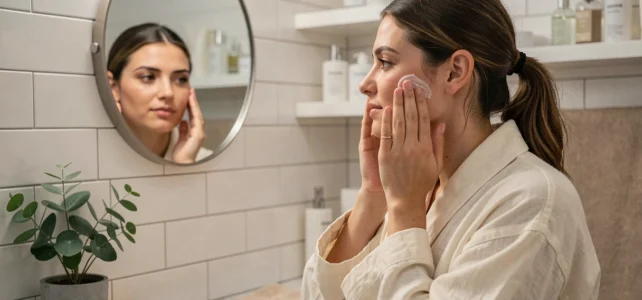
An effective beauty routine relies on a sequence of gestures where the order and compatibility matter more than the number of products used. Applying a serum on poorly cleansed skin or layering two conflicting active ingredients nullifies the investment of time and money. Enhancing your daily routine starts with understanding a few basic mechanisms before adding anything to your bathroom.
Fragrance allergens in cosmetics: what the European regulation changes
The European regulation has recently expanded the list of fragrance allergens to be declared on labels, increasing from around twenty substances to several dozens. This change significantly alters the reading of the compositions of creams, shower gels, and perfumes.
The declaration threshold remains low: 0.001% for leave-on products (face cream, body lotion, perfume) and 0.01% for rinse-off products (shower gel, shampoo). INCI lists on bottles will significantly lengthen in the coming months as manufacturers comply with the new requirements.
In practice, for those looking to explore the charm bath on Make Up Me, this increased transparency makes it easier to spot potentially irritating substances before purchase. Reading the end of the INCI list (where allergens are listed) becomes a useful reflex, especially for reactive skin or those prone to eczema.
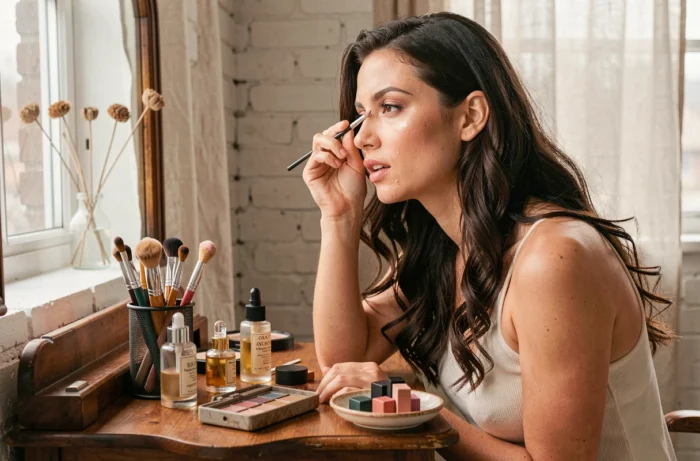
Order of application for facial care: the logic of skin penetration
The order in which products are applied is not a marketing convention. It follows a simple physicochemical rule: the most fluid textures are applied before the thicker ones. A watery serum penetrates the stratum corneum as long as no oily film covers it. Reversing the order blocks the diffusion of active ingredients.
Typical morning sequence
- Gentle cleanser (gel or micellar water) to remove sebum accumulated overnight, without stripping the hydrolipidic film.
- Targeted serum (vitamin C, niacinamide, or hyaluronic acid) applied on slightly damp skin to enhance absorption.
- Moisturizing cream suitable for skin type, which seals in the serum’s actives and maintains hydration.
- Sun protection as the last step, even on cloudy days, as UV rays penetrate clouds and accelerate skin aging.
In the evening, double cleansing (an oily product followed by a watery cleanser) replaces the single step in the morning. It dissolves makeup and sunscreen before deeply cleansing the skin. Double cleansing is the foundation of an effective evening routine, regardless of skin type.
Common mistake: mixing acids and retinol on the same night
Applying an acid exfoliant (AHA, BHA) followed by retinol in the same routine increases the risk of irritation without improving results. Alternating nights (acids one day, retinol the next) allows the skin barrier time to restore between two stimulations.
Long-lasting makeup and formula choices: adapting the look to your skin
Makeup that lasts all day depends less on the brand than on skin preparation and texture compatibility. A makeup primer fills pores and sets foundation by creating an even surface. Without it, sebum breaks down pigments within hours, especially on combination to oily skin.
For the complexion, mineral powder formulas are suitable for oily skin because they absorb sebum. Dry skin benefits more from creamy foundations enriched with moisturizing agents. Layering an oily formula on already oily skin creates an uncontrolled shiny effect, while powder on dry skin accentuates flaking areas.
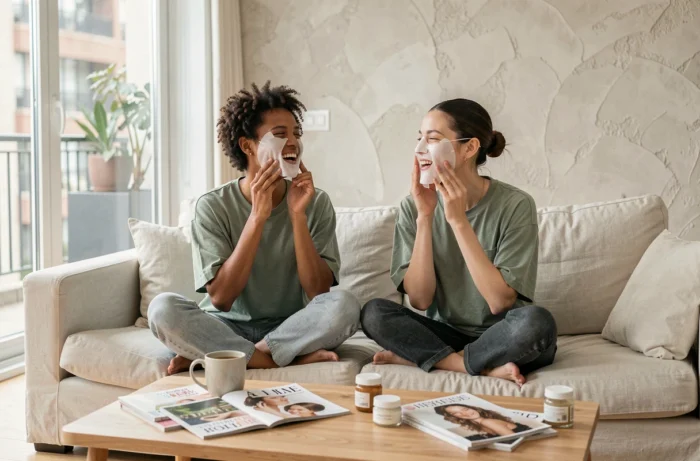
The eyes are worked in thin layers. Applying eyeshadow with fingers deposits more pigment than a brush, but a brush blends transitions better. For a natural look that lasts, a layer of cream eyeshadow followed by a touch of powder in the same shade creates a “sandwich” effect that resists sweat and friction.
Hair care integrated into the daily beauty routine
Hair reacts to the same principles as skin: excessive washing strips the scalp, which compensates by producing more sebum. Spacing shampoos to two or three times a week is sufficient in most cases to maintain a balanced scalp.
The choice of shampoo depends on the condition of the scalp, not the nature of the lengths. An oily scalp with dry ends requires a purifying shampoo applied only to the roots, followed by a conditioner reserved for lengths and ends. Applying conditioner to the scalp weighs down the roots and accelerates oiliness.
Hair masks work better on towel-dried hair (not soaking wet). Excess water dilutes the mask’s actives and reduces contact time with the fiber. Towel-drying before applying the treatment, then leaving it on for the indicated time, yields visible results from the first use.
Adapting your beauty routine according to the season
The skin has different needs in winter and summer. In autumn and winter, cold and heating dry out the skin barrier. Switching from a light cream to a richer cream or adding a plant oil as the last layer compensates for this water loss.
In spring and summer, sebum production increases. Lightening the texture of your cream and strengthening sun protection are the two priority adjustments. Changing texture according to the season prevents most skin imbalances (shine in summer, tightness in winter).
The lips, lacking sebaceous glands, dehydrate faster than the rest of the face. A lip balm applied before lipstick or gloss protects the mucosa and prolongs the color’s wear. This gesture takes three seconds and changes the texture of the makeup for the rest of the day.