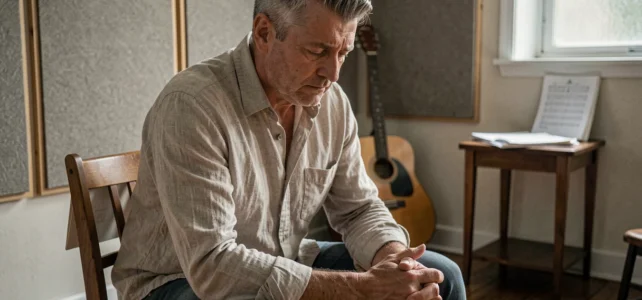
Gaëtan Roussel, singer of Louise Attaque and recognized solo artist, faced a major health challenge with the announcement of cancer at the end of 2024. Around this episode, a persistent confusion has arisen on the internet between cancer and autoimmune disease, two distinct medical categories. Understanding this distinction helps to better grasp what the musician has truly faced and how his career has been transformed.
Cancer and autoimmune disease: a frequent confusion surrounding Gaëtan Roussel
Many web pages associate Gaëtan Roussel’s name with an autoimmune disease. No reliable public source confirms such a diagnosis. The verified information concerns a cancer announced at the end of 2024, and it is this event that altered the course of his artistic projects.
The confusion between cancer and autoimmune pathology is not unique to this case. In an autoimmune disease, the immune system mistakenly attacks the body’s own tissues, causing chronic inflammation that can affect the skin, joints, or internal organs. Cancer, on the other hand, results from abnormal cell proliferation. Treatments, prognoses, and consequences on daily life differ profoundly.
To better understand the impact of autoimmune disease on Gaëtan Roussel as discussed online, it is important to keep in mind that this association is more about digital speculation than a statement from the artist or a medical announcement.
This mechanism of misinformation regularly affects public figures. A keyword associated with a famous name is enough to generate content that cites each other, creating an impression of consensus where there is no primary source.
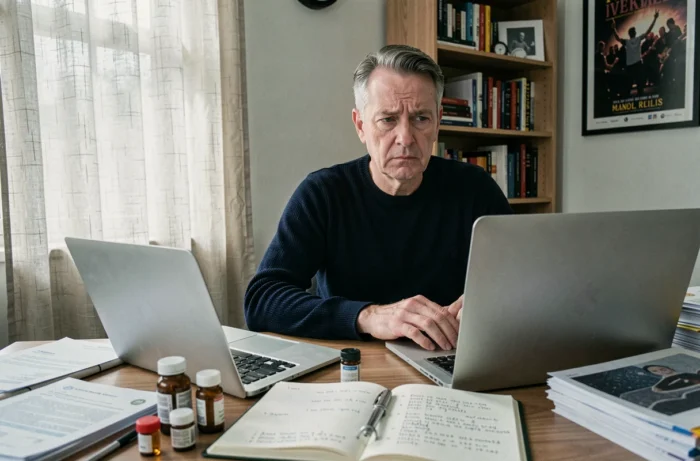
Gaëtan Roussel facing cancer: what the artist has publicly shared
Gaëtan Roussel’s public statements focus on his battle against cancer, not on an autoimmune disease. The singer has mentioned this ordeal in several interviews, without going into clinical details. This choice of discretion has not prevented the proliferation of speculative content about his health.
The announcement of cancer at the end of 2024 coincided with a pivotal period for the artist. Between his solo career, projects with Louise Attaque, and various collaborations, the illness disrupted a very busy creative schedule. The singer had to adapt his commitments, postpone certain concerts, and reassess his priorities.
One often overlooked element by sensationalist articles: Gaëtan Roussel has never presented his situation as a definitive halt. His statements hinted at a desire to return to the stage as soon as his condition allowed, which indeed happened.
Tours and album Marjolaine: a musical career revived in 2026
Recent facts contradict the idea of a prolonged halt. In 2026, Gaëtan Roussel returned with the promotion of Marjolaine, his album that marks a strong creative comeback. Interviews, acoustic sessions, and concert dates confirm sustained artistic activity.
Several stage appointments are already scheduled, notably in Normandy and Metz. The deluxe version of the album has also been released, a sign that the artist and his team are fully investing in this promotional cycle. Far from the narrative of a diminished musician, Gaëtan Roussel’s career after cancer shows remarkable adaptability.
This trajectory illustrates a pattern found in other artists who have faced health challenges:
- A phase of partial withdrawal during treatments, with postponed dates and relative media silence
- A gradual return through less physically demanding formats (interviews, acoustic sessions, studio promotion)
- A complete return to the stage once remission is confirmed or treatments are stabilized
Gaëtan Roussel’s journey follows this logic. Music was not abandoned during the illness; it simply changed pace.
Reliability of online health sources: pitfalls to avoid
The case of Gaëtan Roussel highlights a broader issue: the spread of unverified medical information associated with public figures. No medical diagnosis should be taken for granted without an identifiable primary source (statement from the individual, official announcement, verifiable interview).
Several reflexes can help distinguish reliable information from speculation:
- Check if the artist or their entourage has directly confirmed the mentioned diagnosis
- Identify the original source of the information, not just an article that cites another article
- Be wary of headlines that associate a celebrity’s name with a highly searched medical term on Google, as this format is often designed to capture traffic rather than inform
- Consult recognized media (national press, cultural magazines) rather than niche sites without a clear editorial line
In the specific case of Gaëtan Roussel, interviews published by media such as Qobuz or Tendance Ouest focus on his music and projects. The autoimmune disease does not appear there, reinforcing the hypothesis of an artificial association created by SEO.
Gaëtan Roussel continues to perform on stage and promote his albums with the energy that has characterized his career since the beginnings of Louise Attaque. Cancer represented a difficult interlude, but the facts show an artist who has resumed his projects and tours. Seeking an autoimmune disease behind this story is to follow a digital thread that leads to no verifiable source.