
The average price in French seaside resorts reaches around €4,536/m² according to FNAIM, representing a premium of about 50% compared to the national average. This structural premium has not diminished despite the correction in the real estate market observed since 2023. For those considering living year-round by the sea, the real issue is to determine whether the price differential is still justified from a wealth perspective.
Climate risk and coastal valuation: the gap that prices obscure
Climate projections are becoming more severe, but prices in seaside resorts have not corrected proportionately. This gap between valuation and actual exposure to the risk of submersion or erosion remains the blind spot of the coastal market.
Insurance costs on the coast are rising faster than rental values. Insurers are reevaluating their rates for municipalities classified as at risk of submersion or affected by coastal retreat. A property located within the perimeter of a Coastal Risk Prevention Plan may see its home insurance premium rise significantly each year, without the rental income keeping pace.
On the financing side, banks are gradually incorporating this parameter. In an exposed municipality, the acquisition file may require additional guarantees or face a slightly degraded rate.
Consulting the coastal erosion diagnosis and the natural risk score of the municipality before any purchase offer is no longer optional. It is a technical step that conditions the solidity of the project.
The question of whether it is still worth buying by the sea is best posed from this insurance and climate perspective, even before examining gross rental yields.

Actual rental yield of a primary residence by the coast
A property occupied year-round does not generate direct rental income. Its yield is assessed by the savings on rent, the wealth appreciation, and sometimes occasional rentals during the owner’s absences. On the coast, this calculation becomes tighter.
A purchase premium that compresses implicit yield
With an entry price 50% higher than the national average, the savings on rent realized by occupying one’s own property loses proportion. The theoretical rent avoided does not always cover the total cost of ownership: mortgage, property tax, maintenance, insurance.
Maintenance costs by the sea far exceed those inland. Salt corrosion on woodwork, more frequent facade renovations, treatment for infiltrations related to sea spray: these items increase the annual budget by several hundred euros compared to a comparable property located twenty kilometers from the coast.
Occasional seasonal rental: a supplement under regulatory constraints
Some owners living year-round rent their property for a few weeks each year during their own vacations. This strategy faces a regulatory framework that has tightened in recent years:
- The Le Meur law has strengthened reporting obligations and expanded the possibilities for municipalities to impose limitations. Several seaside resorts have established quotas or prior authorization regimes for tourist furnished rentals.
- The LMNP status (non-professional furnished rental) has seen its tax framework evolve, with a reduction in the flat-rate allowance applicable to unclassified tourist accommodations.
The net yield of a supplementary seasonal rental has significantly decreased. We recommend simulating the net income after tax and charges before relying on this supplement in the financing plan.
Coastal facades: where does the price premium remain coherent
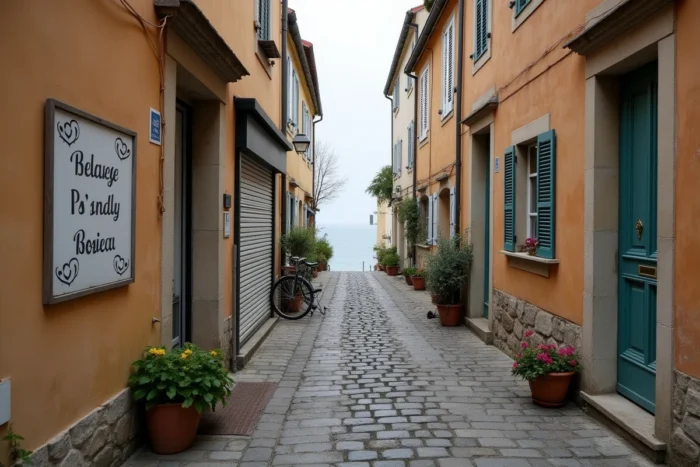
The French coastline does not form a uniform market. The price per square meter varies considerably from one facade to another. The Côte d’Azur and the Basque Country concentrate the highest valuations, driven by land scarcity and international demand.
The Manche and Brittany often display prices below the coastal average. Their annual rental market remains more dynamic thanks to the presence of key employment hubs (Brest, Saint-Malo, Cherbourg).
For a primary residence occupied year-round, facades adjacent to employment hubs offer a better price-use balance. A property in northern Brittany or on the Opal Coast retains solid wealth value without bearing the premium of exclusively tourist areas.
Wealth arbitration: coastal purchase versus alternative investment
Buying a primary residence by the sea requires a significant capital investment. The question arises directly: would this same capital, invested elsewhere, yield a higher risk-adjusted return?
The rapid increase observed between 2020 and 2022 has significantly slowed. The capital gain is no longer guaranteed in the short term. The owner-occupant derives their main benefit from the quality of life, not from appreciation.
We observe that the best-positioned buyers purchase without excessive leverage, in municipalities with a local economy (port, services, health, education). Mono-touristic resorts, where winter vacancy impacts businesses and public services, present a more pronounced risk of depreciation. A year-round inhabited seaside property is structurally worth more than a resort deserted eight months of the year.
Living year-round on the coast remains a defensible choice, provided it is treated as a quality of life arbitration backed by a tangible asset. Persistent premium, climate constraints, regulatory tightening: each parameter deserves a numerical analysis before signing, municipality by municipality.