
Creative decoration is not just about choosing a style from a catalog. It is based on composition principles, repurposing techniques, and a keen understanding of the available volumes. Here, we discuss the most underutilized levers to transform an interior methodically.
60-30-10 Composition Rule Applied to Every Room
Any coherent palette relies on a distribution of colored surfaces. The 60-30-10 rule assigns a dominant color to large surfaces (walls, floor), a secondary color to furniture and textiles, and an accent color to accessories and decorative objects.
We recommend starting with the dominant color before choosing the other two shades. Many projects fail because the choice of a cushion or vase precedes that of the wall. By reversing the order, dissonances are created that are difficult to correct without starting over.
The resources available on crea-decor.net allow you to visualize color combinations already structured according to this principle, making the transition from idea to concrete result easier.
The accent (the famous 10%) is the easiest variable to modify over the seasons. A light fixture, a series of frames, or a brass object is enough to shift visual attention without touching the walls or furniture.
Repurposing Furniture and Sustainable Decoration
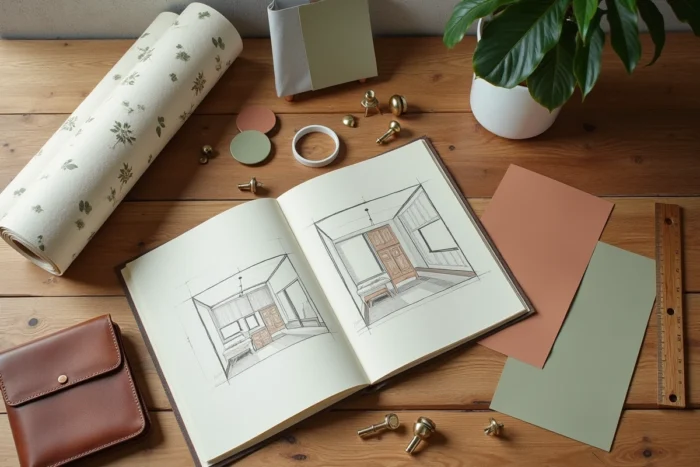
The instinct to buy new is giving way to creative repurposing of existing furniture. Sanding and repainting a dresser, replacing handles with leather or ceramic models, transforming a chair into a nightstand: these actions produce unique pieces that the market does not offer.
This approach is not just a budgetary argument. It anchors decoration in a circular logic where each piece of furniture gains a second life instead of ending up in a landfill. Creative DIY (often grouped under the DIY label) then becomes a true lever for personalizing space.
High-Impact Visual Interventions on Reclaimed Furniture
- Add designer legs (turned wood, metal pin) to a low piece of furniture to change its line and visually lift it off the ground.
- Apply adhesive wallpaper to the back of an open shelf: the contrast with the displayed objects creates a depth that paint alone does not offer.
- Change the seat of a caned chair to an upholstered fabric stretched over a plywood frame, modernizing the silhouette without replacing the structure.
The cost of these modifications remains marginal compared to a new purchase, and the result is consistently more unique.
Layered Lighting: The Technique That Restructures a Space
A three-level lighting plan transforms a room more than a change of wall color. We distinguish ambient lighting (ceiling fixture or pendant), functional lighting (reading lamp, worktop spot in the kitchen), and accent lighting (LED strip behind a piece of furniture, floor lamp directed at a wall).
The majority of interiors only have the first level. Adding the other two creates contrast zones that redefine perceived volumes. A narrow hallway appears wider with low grazing lighting on the floor. A living room gains depth when a low light source illuminates a textured wall from below.
Choosing Color Temperature
Color temperature (expressed in kelvins) conditions the ambiance. Warm tones are suitable for the living room and bedroom. Neutral to slightly cool tones adapt better to the kitchen and bathroom. Mixing two temperatures in the same room creates visual discomfort that the brain perceives without always identifying it.
We recommend checking the temperature indicated on each bulb before purchase, as manufacturers do not all use the same commercial names for the same value.
AI Decoration Tools: What They Change Concretely
Applications like Home Interior Decor: AI Design generate suggestions for furniture, colors, and layouts from a simple photo of the room. Adjustments are made in real-time according to the preferences and budget provided.
The main interest is to test multiple layouts without moving a single piece of furniture. You get mood boards, plans, and sometimes integrated shopping lists. For a creative decoration project, this allows you to validate a direction before committing time or money.
The limitation remains the modeling of textures and natural light, which these tools represent approximately. The final rendering in the actual room always depends on the orientation of the windows, ceiling height, and flooring, three parameters that the algorithm simplifies.
Dressing a Wall Without Heavy Renovations
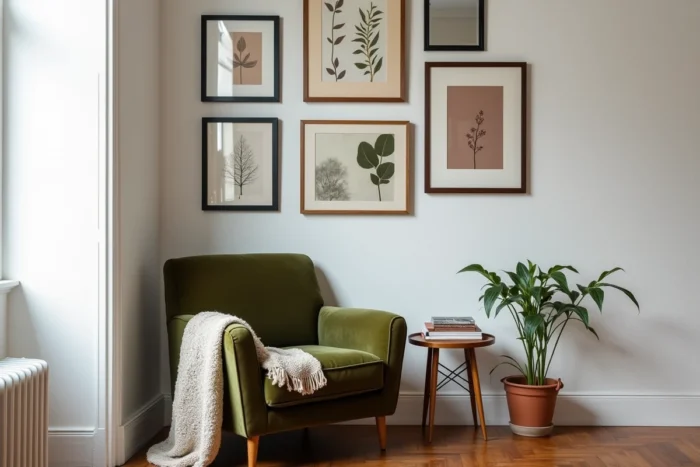
The accent wall is a quick transformation lever, provided you go beyond a simple flat paint. A mix of frames in different formats arranged in an asymmetrical composition adds relief without drilling more than a few holes.
Wooden battens glued or fixed with clips provide an alternative to traditional paneling. Installed vertically and spaced regularly, they create a play of shadows that changes throughout the day according to natural lighting. This technique works particularly well behind a headboard or in a narrow entryway.
For renters, removable solutions (repositionable wallpaper, pressure-mounted shelves) allow for personalizing a wall without incurring restoration costs upon departure.
Creative decoration relies less on budget than on the ability to combine composition principles, material repurposing, and layered lighting. Mastering these three axes together produces results that no impulsive purchase in a store can replicate.