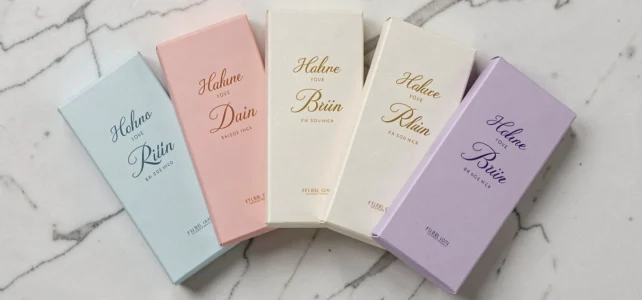
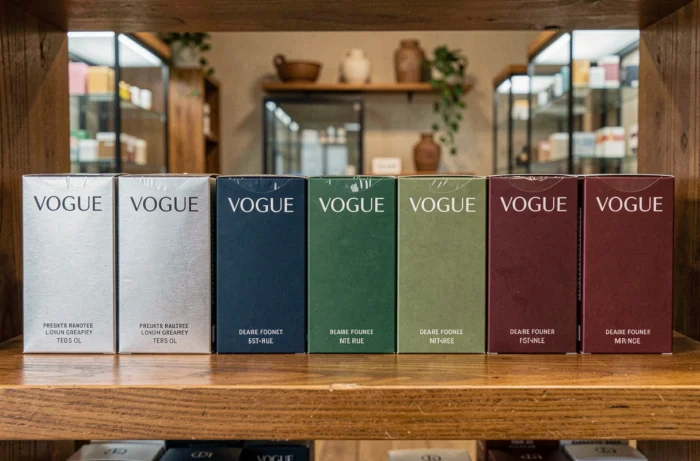
In the French tobacco market, Vogue cigarettes come in several pack colors that go beyond a simple graphic choice. Each shade corresponds to a blend of tobacco, a type of filter, and a format that alters the mouthfeel, perceived strength, and aftertaste. The price itself varies by reference, with price adjustments observed in 2026 on certain lines of the range.
Slim format and nicotine perception: what color alone does not convey
Vogue cigarettes share a slim format, thinner than standard cigarettes. This reduced diameter affects combustion and the volume of smoke inhaled with each puff. Several specialized retailers describe the slim format as giving the impression of a lower nicotine intake and a smaller volume of smoke, regardless of the pack color.
This sensation does not stem from a real reduction in the rate of absorbed substances. It arises from the draw: a narrower cylinder generates a tighter pull, which mechanically reduces the amount of smoke per puff. The color of the pack then plays a role, signaling a distinct blend and filter ventilation that enhances or diminishes this basic effect.
A smoker comparing a light Vogue to a darker Vogue thus perceives two simultaneous variables: the slim format common to the entire range, and the specific adjustment of each reference. Understanding the different colors of Vogue cigarettes requires distinguishing between what pertains to the format and what pertains to the blend.
Vogue filter ventilation: the technical mechanism behind each color
The filter of Vogue cigarettes features micro-perforations arranged in a ring. These openings allow ambient air to mix with the smoke before reaching the mouth. The higher the ventilation, the lighter the smoke appears.
The references with lighter shades (white, lilac) have a higher ventilation rate. The air dilutes the smoke, reducing the throat hit sensation and softening the perceived taste. The darker references (classic blue) use less ventilation, allowing a more concentrated and robust smoke to pass through.
This system presents a problem documented by public health research: compensation. A smoker who perceives lighter smoke tends to inhale harder or longer to achieve a comparable level of nicotine satisfaction. Ventilation alters perception without reducing actual exposure. The micro-holes in the filter can even be obstructed by fingers or lips during the draw, partially canceling the dilution effect.
Virginia and Burley tobacco: the taste foundation according to the Vogue variant
The color of the pack also indicates the composition of the blend. The lighter variants prioritize a higher proportion of Virginia flue-cured tobaccos, dried with hot air. This process preserves the natural sugars in the leaves, producing smoke perceived as smoother and slightly sweet from the first puff.
The stronger variants incorporate more Burley tobaccos, air-dried. Burley provides a more pronounced body, a slight bitterness, and a more persistent aftertaste. The combination of these two tobacco families in varying proportions creates the range of sensations associated with each color.
Here are some guidelines to distinguish the profiles of the range:
- Lighter variants (white, lilac): Virginia dominant, smooth smoke, short aftertaste, discreet throat hit
- Classic blue variant: Virginia-Burley balance, medium body, more pronounced aftertaste, moderate to strong hit
- Historical menthol variants (now restricted): addition of menthol flavors based on Virginia, freshness sensation that masked the hit and altered the aftertaste
The gradual disappearance of menthol variants from the European market, linked to regulatory restrictions on characterizing flavors, has reduced the available palette. Smokers seeking freshness have turned to the lighter references in the range, which may have altered the overall perception of the remaining colors.
Price of Vogue cigarettes in 2026: color also comes at a cost
The difference between Vogue variants is not limited to sensations. In 2026, French pricing grids show price discrepancies between references. The Vogue L’Essentielle Bleue is listed at €12.00 per pack, compared to €13.50 for the Vogue L’Originale Bleue according to another grid from the same year. These variations reflect distinct commercial positioning within the same brand.
The general pricing context also plays a role. The average price of a pack of 20 cigarettes in France was around €12.47 as of June 1, 2026 according to data reported by ToutSurMesFinances. Thus, Vogue cigarettes fall within a range close to the national average, or even above for some references, placing them in the upper segment of the market.
This pricing reality influences the choice of color. A regular smoker sensitive to budget may prefer the cheapest reference in the range, regardless of their taste preferences. The color of the pack then becomes as much an economic choice as a sensory one.
Vogue cigarettes and regulatory framework: what has changed
Slim cigarettes, and Vogue in particular, have been the subject of regulatory discussions in France and the European Union. Their format and brand image have been pointed out as marketing levers targeting a specific audience. Restrictions on names deemed attractive have already affected certain product lines in the sector.
The European directive on tobacco products also regulates the mentions allowed on packs. Terms suggesting reduced harm (light, mild, légère) have been banned for several years, which explains the reliance on color codes as the main indicator of perceived strength. The color replaces the words that regulation has removed.
This visual coding system works by habit: smokers learn to associate a hue with a sensation, without the pack explicitly displaying the strength level. Field feedback varies on the reliability of this association, with some smokers reporting less distinct taste differences than what the colors suggest.
The choice of a Vogue pack color thus relies on a combination of technical factors (blend, ventilation, format), economic factors (price per pack), and regulatory factors (restrictions on flavors and names). None of these factors taken in isolation is sufficient to explain the final sensation. It is their combination that produces the experience unique to each reference.